
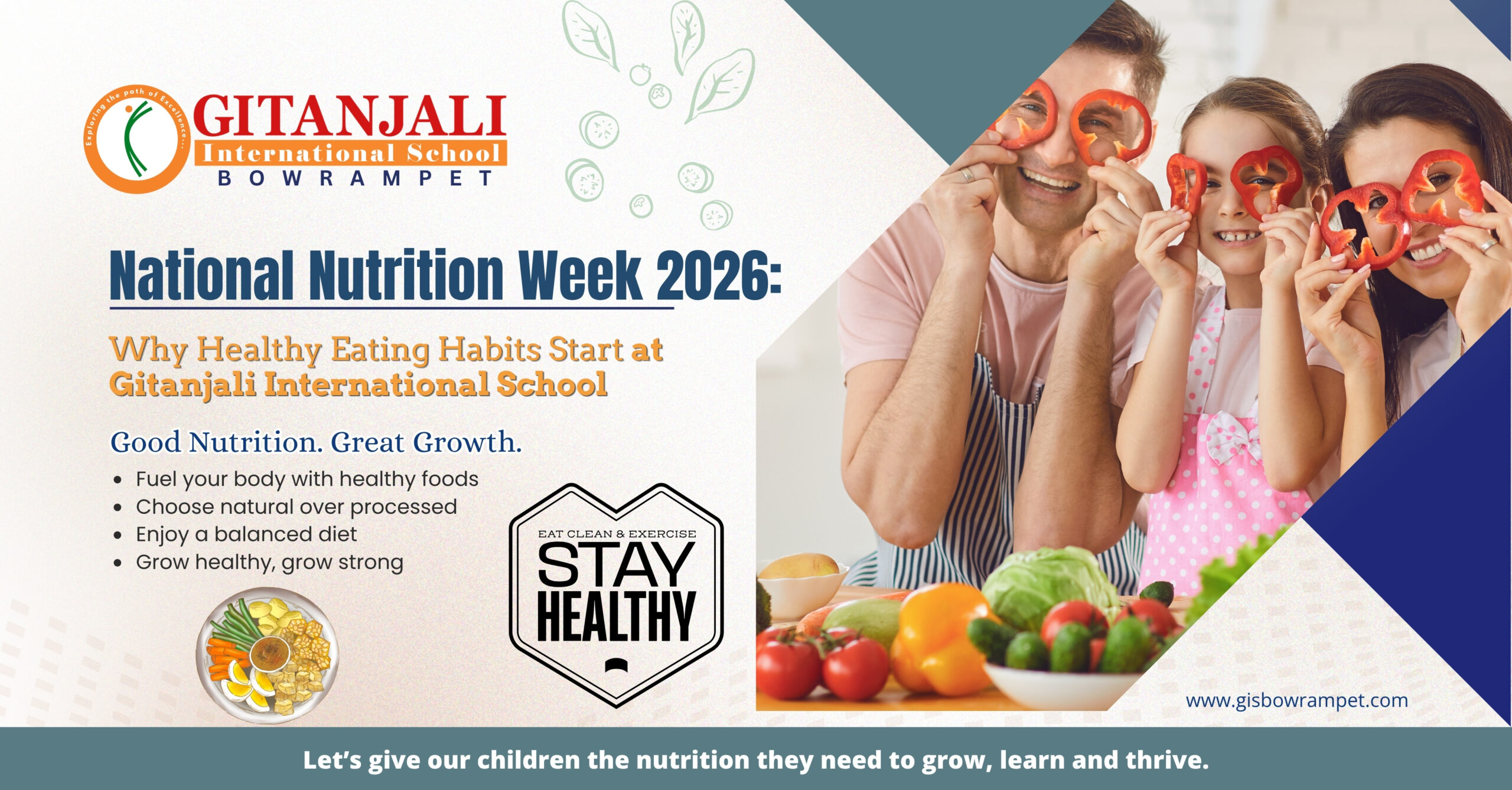
Every year in September, National Nutrition Week is celebrated in India from September 1 to September 7 with the sole aim of making people aware of the right food habits and nutrition.National Nutrition Week is celebrated every year from 1st September to 7th September in India as a reminder of a best-kept secret in the daily chaos of school dropping and picking up and homework assignments: what our children are eating. Food is not just fuel to see the day for growing children. It influences their growth, their levels of energy, their ability to focus in class and their general well-being.
Schools are in a special situation here. They are not only a place where kids are learning Math and Language but they are also a place where habits are formed — sometimes without kids being aware of it. With the appropriate activities and a little practice, children can develop positive eating patterns that will last a lifetime.
Why Nutrition Deserves More Attention in a Child’s Growing Years
A combination of nutrients is needed, not one ‘super food’ that can do everything. A well balanced diet is one that comes from a variety of food groups, not just one.
Kids need vitamins every day, and fresh fruit such as bananas, apples, oranges, guava or papaya will provide them with that. Veggies (carrots, beans, peas, leafy greens), for variety and nutrients that can easily be overlooked. Wholegrains like oats, brown rice, ragi and jowar also need to be included on the plate regularly and protein foods like dal, chickpeas, eggs, paneer, curd and nuts (if applicable) fill the gap nicely.
There are many better snack ideas than those of the packaged sugary treats – roasted chana, makhana, fresh fruit, sprouts or making something up at home. It’s just as important to stay hydrated, and encouraging regular water intake for children can help.
How Schools Can Bring Nutrition Education to Life
Knowing the correct nutrients in a text book is only as much knowledge as nothing. It’s all about getting kids to engage with food, to taste it, to plant it, to discuss it. This is where National Nutrition Week comes in handy, as it provides schools with a natural opportunity to create activities around healthy eating.
Some suggestions that seem to work:
- Healthy Tiffin Day – Students take home-made healthy food rather than traditional snack foods.
- Nutrition Awareness Sessions – brief and straightforward discussions about a balanced meal.
- Fruit and Vegetable Activities — getting children to try fruits and vegetables they are not familiar with.
- Healthy Recipe Demonstrations — a way to prove that healthy food doesn’t need to be “hard to make.
- Nutrition Quizzes — making learning fun for kids.
- Poster-Making Competitions — unleash creativity and spread a healthy message.
- School Kitchen Gardens — a practical experience of where vegetables and herbs really come from.
- Healthy Snack Campaigns — softly nudging children to help them avoid high sugar, salt and unhealthy fat foods.
Turning Nutrition Lessons Into Everyday Habits
Educating about nutrition is best when it’s not limited to the classroom! If teachers and parents agree, children are more likely to actually enjoy new foods and nutritious eating than make it a task.
In the Bowrampet of Gitanjali International School, nutrition awareness is seen as integrated with holistic learning that goes beyond the textbooks. Students have the opportunity to engage in interactive activities, open classroom discussions, creative projects, and school-led initiatives to connect with what they’re eating and what they’re learning.
One of the best international schools in Bowrampet, the school sees beyond the classroom and helps students develop practical skills, skills that are applicable to their daily life skills: the appreciation that will make them choose health in the school and at home.
Parents and Schools: Better Together
Good health is seldom established alone. They’re strengthened when school and family are working together. Just by packing a balanced lunchbox and encouraging children to sample new healthy foods with a minimum of fuss, parents make a significant contribution.
Schools too can sustain the momentum by providing opportunities for nutrition to emerge in activities, discussions and real-life, hands-on learning. All these little things contribute to children having a real understanding of how food, health and well-being relate.
What National Nutrition Week 2026 Really Stands For
National Nutrition Week 2026 does not only take the form of a seven-day calendar event, but also a long-term reminder. It’s an opportunity to educate kids about the importance of healthy eating and begin developing weekly habits that will continue into the future.
School can make a difference in the health and nutrition awareness of children by promoting healthy eating habits such as balanced meals, better snacking, adequate hydration, and a true understanding of nutrition. It’s sometimes the small, consistent decisions that we make day-to-day that create the best foundation for a healthy future.